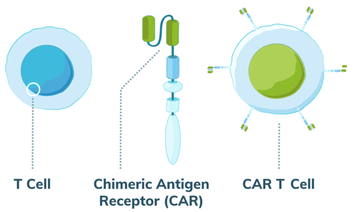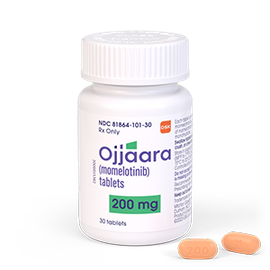
BCMA AND CD19 CAR T CELL THERAPY
The FDA added a boxed warning for T cell malignancies in patients receivingBCMA- or CD19-directed autologous CAR T cell immunotherapies after reportspost treatment, T-cell malignancies. Patients now must be monitored forsecondary malignancies, potentially requiring ongoing vigilance. This will affectmarket-leading myeloma products including Abecma, Carvykti, and Breyanzi.


MULTIPLE MYELOMA
The FDA approved Bristol Myers Squibb and 2seventybio's Abecma (idecabtagene vicleucel) for triple-classexposed relapsed or refractory (R/R) multiple myelomaafter two prior lines of therapy. Abecma demonstrated a51% reduction in the risk of disease progression or deathand has a well-established safety profile. These resultsexpand Abecma's availability earlier in treatmentsequencing with meaningful treatment-free intervals.
MULTIPLE MYELOMA
The European Commission approved CARVYKTI(ciltacabtagene autoleucel; cilta-cel) for relapsed andrefractory (R/R) multiple myeloma patients, achieving a74% reduction in disease progression or death risk inprevious lines of therapy. The approval is based on thePhase 3 CARTITUDE-4 study results, showing higherresponse rates and overall survival with cilta-celcompared to standard therapies. Results from the studydemonstrated a 76% progression-free survival rate at12 months and an 85% overall response rate withcilta-cel.

MULTIPLE MYELOMA
Regeneron announced positive data from the Phase 1/2LINKER-MM1 trial of linvoseltamab showing a 71%objective response rate in heavily pre-treated multiplemyeloma patients, accompanied by a deepening ofresponse over time. In particular, this promises a longterm treatment not currently available, particularlyeffective with high-risk and high-disease burdenpopulations. Phase 3 trials are ongoing, withlinvoseltamab currently under FDA review for priorityapproval with a target action date of August 22, 2024.
MULTIPLE MYELOMA
In a study from the Mayo Clinic on outcomes oftherapies in multiple myeloma patients refractory tolenalidomide after receiving it as a first line therapy, itwas determined that the definition of refractoriness isnot dependent on dose. The study showed thatoutcomes did not differ between standard and lowdose refractory groups for second line therapy(p=0.95), and the PFS for lenalidomide retreatmentwas inferior in both groups compared to nonrefractory patients (p<0.001). Given standard vs lowdose refractoriness did not impact clinical outcomes,highlighting lenalidomide resistance independence ofdose.

MULTIPLE MYELOMA
The FDA held an Oncologic Drugs Advisory Committee (ODAC)meeting on April 12th, 2024 where it acknowledged the value ofminimal residual disease (MRD) as an endpoint for acceleratedapproval in multiple myeloma. The FDA noted with a strongassociation between MRD negativity and progression-freesurvival and overall survival. In a meta-analysis, 12-month MRDnegativity significantly correlated with progression-freesurvival and overall survival, supporting MRD as a predictivebiomarker. Despite the resolution, the FDA noted limitations intrial design, assay standardization, and populationheterogeneity which may improve in future studies.


Get expert analysis, industry trends, and exclusive updates delivered straight to your inbox. Stay ahead of the curve with valuable insights that drive success.