MYLEOFIBROSIS (MF)
The US FDA has approved GSK's Ojjaara for the treatment of intermediate or high risk myelofibrosis, a blood cancer affecting around 25,000 patients in the US.Ojjaara is the first medicine approved for both newly diagnosed and previously treated myelofibrosis patients with anemia. The approval is supported by data from the pivotal MOMENTUM and SIMPLIFY-1 Phase III trial


CHRONIC MYELOGENOUS LEUKEMIA (CML)
Bosulif (bosutinib) is now indicated for pediatric patients aged 1+ with newly diagnosed (ND) or resistant or intolerant (R/I) chronic phase (CP) Ph+CML. Efficacy was assessed in the BCHILD trial, with favorable responses in both ND and R/I patients. For pediatric patients with ND CP Ph+ CML, the major(MCyR) and complete (CCyR) cytogenetic responses were 76.2% (95% CI: 52.8, 91.8) and 71.4% (95% CI:47.8, 88.7), respectively. Common side effects includeddiarrhea, abdominal pain, and rash. For pediatric patients with R/I CP Ph+ CML, the MCyR and CCyRresponses were 82.1% (95% CI: 63.1, 93.9) and 78.6%(95% CI: 59, 91.7), respectively.

AML AND MDS
Updated data from the Phase I/II BEXMAB study ofbexmarilimab in combination with standard of care (SoC)in R/R AML HMA-refractory MDS are consistent with the high objective response rate (ORR) observed in the previous results. 8 of the 11 patients are CompleteResponders (CR) or CR with incomplete blood recovery(CRi). The ORR was 80% in the prior HMA-failure MDS group, and the combined ORR across all 22 patients was50%. Bexmarilimab continues to be well-tolerated with no dose-limiting toxicities observed.
HEMATOLOGY
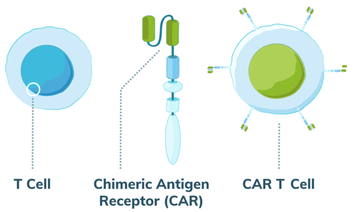
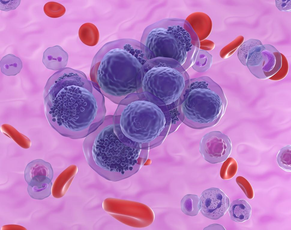
Researchers at the University of Pennsylvania Perelman Schoolof Medicine have developed anew approach to CAR T-cell therapy using CRISPR-based gene editing. They engineeredboth T cells and hematopoieticstem cells to target a protein called CD45, which is present on most blood cells, to create a universal CAR Tcell therapy that can eliminate various blood cancers while sparing healthy cells. In mouse models, the treatment effectively eliminated tumors and did not cause serious side effects. This approach couldtheoretically treat all forms and types of blood cancer.and may soon enter clinical trials
AML
Gilead Sciences has halted its ENHANCE-2 study in AML with TP53 mutations after an ad-hoc analysis and review by an independent data monitoring committee indicated that magrolimab is unlikely to provide a survival benefit compared to the standard of care.
Gilead is now working with study investigators to determine appropriate next steps for patients involved in the trial. The news follows a recent partial clinicalhold placed on the initiation of new patients in US studies evaluating magrolimab to treat AML and recentdiscontinuation of the Phase 3 ENHANCE study ofmagrolimab in higher-risk myelodysplastic syndromes.

MULTIPLE MYELOMA
In a subgroup analysis of the Phase III CARTITUDE-4trial presented at the 20th International MyelomaSociety (IMS) Annual Meeting, patients with multiple myeloma and poor prognostic features, including high-risk cytogenetics, soft-tissue plasmacytoma,ISS stage III disease, and triple-class exposure,experienced significant progression-free survival (PFS) benefit with single-infusionciltacabtagene autoleucel (cilta-cel). The 12-month PFS rates were favorable inpatients with standard or high cytogenetic risk, soft-tissue plasmacytoma, or triple class refractoriness. The analysis affirmed the effectiveness of cilta-cel in a wide range of clinically relevant multiple myeloma subgroups, even those with poorprognostic factors.
https://www.onclive.com/view/cilta-cel-leads-to-high-pfs-rates-in-patients-with-multiple


Get expert analysis, industry trends, and exclusive updates delivered straight to your inbox. Stay ahead of the curve with valuable insights that drive success.