GEOGRAPHIC ATROPHY (GA)
Astellas US Holding, Inc., has agreed to acquire 100% of the outstandingshares of Iveric Bio for $40.00 per share in cash, making Iveric Bio anindirectly wholly-owned subsidiary of Astellas. This acquisition will beinclusive of Iveric's Avacincaptad Pegol (GA), for which the FDA accepted a New Drug Application with Priority Review in February and demonstrated a 59% risk reduction in vision loss at ARVO 2023.


DIABETIC RETINOPATHY (DR)
DR is the most common cause of vision loss in working age adults in most developed countries. Early detection of this condition can lead to better control of systemic A1C. Historically, the pathological changes that occur in diabetic patients precede clinically detectable changes.The theme of this year's ARVO was diversity. Dr.Edmund Arthur from the University of Alabama'sBirmingham School of Optometry presented research that examines the use advanced retinal imaging,optical coherence tomography angiography, to develop a novel retinal vascular biomarker for early detection of DR and diabetic macular edema (DME), especially inunderserved communities

RETINITIS PIGMENTOSA
Nanoscope Therapeutics reported positive results from its Phase 2b RESTORE trial evaluating MCO-010, a gene therapy for the treatment of retinitis pigmentosa.The trial enrolled 46 patients with inherited retinal diseases, who received a single injection of the therapy.At six months after treatment, there was a statisticallysignificant improvement in visual acuity compared to placebo, and no serious adverse events were reported.The company's CEO stated Nanoscope has upcomingdiscussions with the FDA regarding an expeditiouspath to market for MCO-010.

GEOGRAPHIC ATROPHY
The Phase 1/2a clinical study of RG6501 is a collaboration between Genentech and Lineage CellTherapeutics. OPREGEN is an allogeneic retinal pigmentepithelial (RPE) cell therapy being developed for the treatment of GA secondary to AMD. The study showedpreliminary evidence of outer retinal structure and visual function improvements with OpRegen in patients with GA and impaired vision. The study also highlighted the potential for a single dose of OpRegen to provide significant clinical outcomes for patients in a disease with a tremendous unmet need
AGE-RELATED MACULAR DEGENERATION (AMD) AND DME
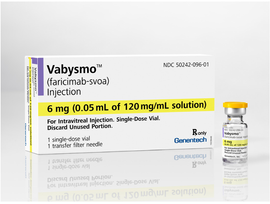
LOOKING AHEAD...Among the 30 abstracts presented by Genentech at thisyear's ARVO, two Vabysmo real-world studies in wet AMD and DME demonstrated that patients extended their dosing intervals early in treatment while maintaining or improving their vision. The majority of patients were able to extend their treatment intervals by at least 6 weeks during the four initial doses. Over 70%of DME patients were experiencing an extension within the first 2 injections. Most of these patients were comingin with 20/40 or better vision.
RETINOPATHY OF PREMATURE (ROP)
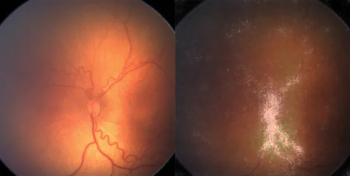
A team of international researchers at University College London-Moorfields developed a deep learning Al model to screen for ROP. The Al model was trained on a sample of 7,414 images of the eyes of 1,370 newborns who had been admitted to the Homerton Hospital, London, and assessed for ROP by ophthalmologists. The algorithm was able to identify ROP with 91% accuracy, and successfully identified ROP in over 1,200 cases.


Get expert analysis, industry trends, and exclusive updates delivered straight to your inbox. Stay ahead of the curve with valuable insights that drive success.